IRONMAN: THE YEAR I STOPPED PLAYING SMALL
A personal story
Prologue: The Wednesday After
By Wednesday, the race was already starting to feel like something I’d watched happen to someone else.
My body still hurt in new and creative ways. Sitting down hurt. Standing up hurt more. Stairs felt like a personal insult. But the weird part wasn’t the soreness. It was the mood.
I expected pride. I expected fireworks. I expected the kind of victory glow that turns ordinary errands into a slow-motion montage with inspirational music.
Instead, I felt… empty.
Purposeless is the best way I can describe it.
Not depressed. More like someone had turned off the main power switch. Like the circus packed up and left town and I was standing in the empty lot holding a ticket stub, wondering if I imagined the whole thing.
Maybe it’s the way big goals work. They lift you up like a drug. Clean living, sharp focus, family mission mode, everything dialed to eleven. And then the moment you cross the finish line, your brain looks around like:
Cool. Now what?
But I’m getting ahead of myself.
Because the truth is: the weekend was perfect. The day was chaos. The race was literally the hardest fight of my life with the weather, the hills, my stomach, and my own mind. But somewhere in the middle of it. Somewhere between a warm PB&J, a cursed downhill turn, and a porta-potty disaster. I became an Ironman.
And it started way earlier than Chattanooga.
Chapter 1: Before the Goal Had a Name
I grew up in rural New Jersey, born in 1979. One year after the Ironman event was created. Which feels poetic now, like the universe planted a little flag in the timeline and said, Don’t worry. We’ll circle back.
I was a kid who couldn’t sit still. A fall on asphalt was preferable to sitting still.
The 80s and 90s raised me with a steady diet of sports heroes and movie soundtracks: skateboarders, surfers, basketball players, men doing impossible things with perfect hair and tragic backstories. I idolized all of them.
If there was a ball, a board, a bike, or a hill to sprint up, I was in.
I watched SportsCenter every morning like it was my job. I absorbed the mythology. I believed, the way kids do, that greatness was a real place you could reach if you wanted it badly enough.
And then one day I saw it.
I can’t remember the exact age, but I remember the feeling like it was yesterday: Ironman Hawaii on ESPN. “Superheroes” swimming through blue water that looked like bottled heaven, biking across lava fields, then running like their legs were powered by something other than cartilage and bone.
And my brain went: Yeah. That will be me one day. Like it was absolutely nothing.
Because I loved all three pieces of this sport.
I loved running. I loved riding my bike, mostly to friends’ houses, but still. I loved swimming. I was swimming before I was walking, I was made for this sport.
And like most childhood dreams, the vision faded.
Life happened. Work happened. Marriage happened. Kids happened. And at some point, I looked up and realized I’d become a man who was very good at being busy… and not at being the person my 8 year old self thought I would be.
Chapter 2: The Runner with the Porsche
When you’re a kid, you look at adults like they’re finished products. Like they came out of a factory already assembled: confidence installed, purpose included, no missing parts.
I looked up to my dad first. He played basketball in high school, so I played basketball. He took up running as an adult. So I ran too. I started looping around the neighborhood lake, and anywhere else I wanted to get to. Very Forest Gump like.
And then there was this guy.
I never got his name. But I saw him constantly everywhere I went when my small neighborhood was the whole world.
Day or night. Heat, cold, rain, it didn’t matter. He ran like he was on a mission, like his life depended on it, running like he was chasing something important.
If it were today, he’d have been an Instagram legend. Shirtless in the heat, unbothered in the weather, radiating that quiet, scary discipline.
One day when I was walking to the basketball court, bouncing my ball along the way. I watched him run up to a sleek, modern house with a yellow Porsche 911 and beautiful wife in the driveway.
In my head, the equation formed instantly:
Fit + mission + cool house + Porsche + beautiful wife = This is what a man looks like.
And that image got filed away in the same mental folder as Ironman Hawaii: Someday.
Chapter 3: A Midlife Crisis Without the Convertible
Midlife has a way of dragging your childhood dreams out of storage and setting them on the kitchen table like an overdue bill.
For me, it wasn’t the cliché crisis. I didn’t want an affair. I didn’t want to abandon my family or blow money on something shiny and temporary.
I longed for purpose.
I wanted to know if I was the kind of man my younger self thought I would become.
I had the family. A good life. The home. The love. I found my dark-haired, beautiful wife and somehow convinced her to marry me. We had two kids who are two of my favorite people on Earth. We were living in Savannah, GA our favorite city.
But health-wise?
I wasn’t the guy from the lake.
At my fittest in high school, I was around 165 pounds. Now I was sitting around 215. I’d run marathons before, tried gym programs, did “spurts” of discipline. Similar to the way a man flosses when he has a dentist appointment coming.
But I never found a mission big enough to obsess over.
Then the opportunity landed, almost by accident, at a family reunion in New Jersey.
My mother is one of thirteen children, so a reunion is an event to behold. We’re talking cousins, in-laws, out-laws, kids everywhere, these were the events that made up my childhood.
And there were the six boy cousins. Danny, Brian, Josh, Christopher, Morgan and Patrick.
The ones I was closest to. Born around the same time. 1978 – through the early 80’s. The crew. The ones who helped build my childhood. We were together constantly: camping, vacations, sleepovers, summer breaks. They weren’t just cousins. They were part of the scaffolding that built my young personality.
For the most part we all grew up in New Jersey together, but our lives would ultimately take us in different directions.
But when we got together again, it was like stepping into an old movie set.
And somewhere in that reunion energy. Not sure if it was that day or later in a text thread, but Josh and Morgan dropped the idea:
Oceanside, California. Ironman 70.3.
They’d been challenging each other to do hard athletic things over the years. Now they were inviting the rest of us.
I was excited. And terrified.
There I was: 30–50 pounds overweight, wondering if my body would be able to survive an event like this.
Brian offered me an out. “Let’s do the relay option together, split the disciplines”.
But pride is a funny fuel. It burns hot and smells a lot like stupidity.
So I said yes to the full Half-Ironman.
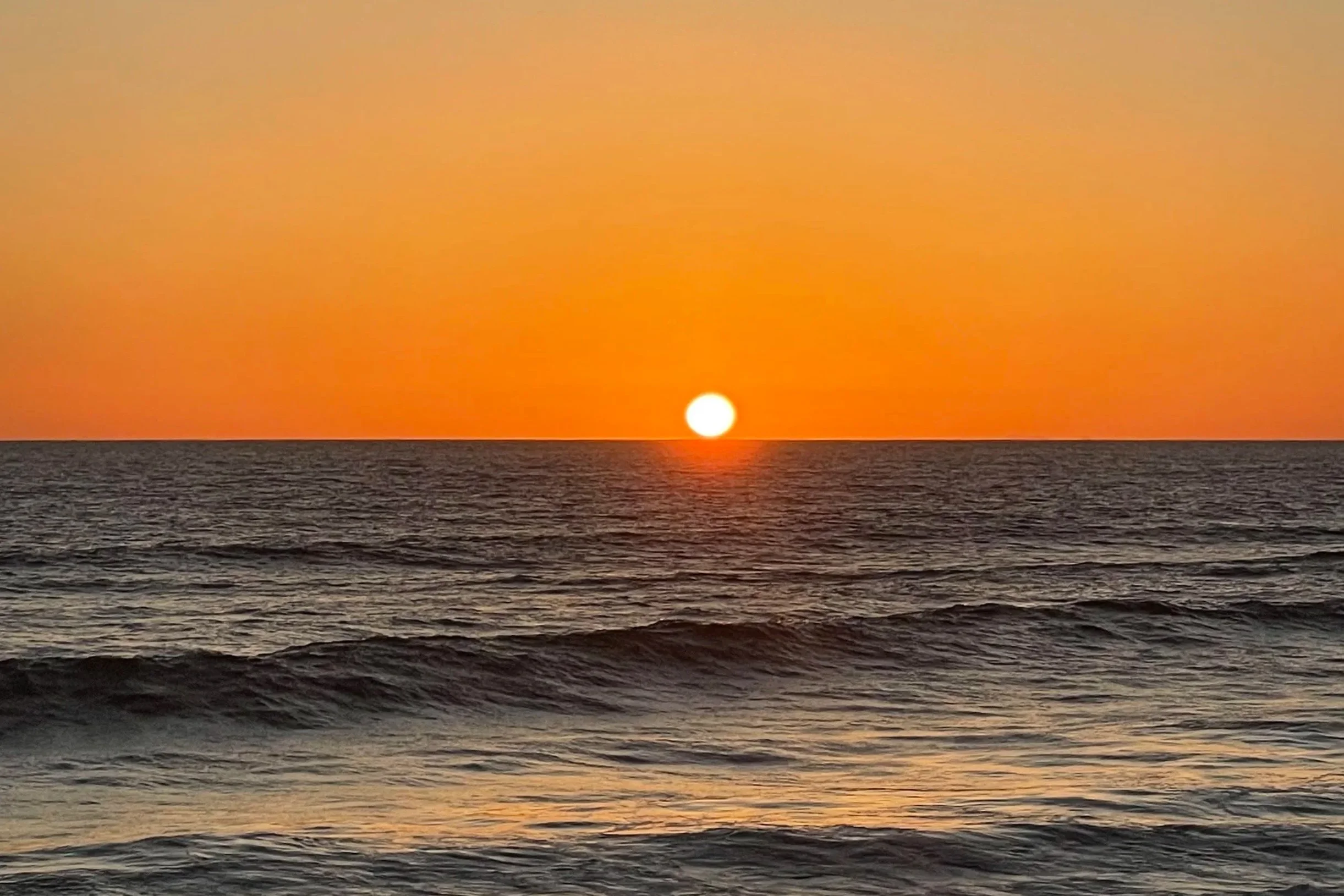
The view from our Oceanside rental.
Chapter 4: Oceanside—The First Test
Training for the half lit a fire.
I started waking early, getting back into the pool, figuring out cycling, re-learning the language of endurance. It wasn’t graceful. Swimming hadn’t been competitive for me in 25 years. Cycling “competitively” was a new universe all together. Running. My old friend had now become my nemesis.
It hurt. It was slow. It felt like betrayal.
And then life did what life does: it attacked the plan.
The kids brought home viruses like they were collecting them. Flu took out the household. Then stomach bugs. Weeks disappeared. Fitness faded. I was on the verge of quitting, I even texted the group. I was out.
Danny called immediately.
I don’t even remember exactly what he said. That’s the thing about accountability: the specific words aren’t the point. It’s the presence. The fact that someone pulls you back from the edge when you’re ready to step off.
I stayed in it.
In April 2024, I flew to San Diego with gear stuffed into bags like I was going to war: wetsuit, swim stuff, bike gear, running shoes. I mailed my bike out separately like a fragile, expensive child.
We rented a house right on the run course with a balcony overlooking the Pacific. Four days with the guys, families, nerves, laughter. Like being thirteen again, but with more electrolytes and far worse sleep.
Race morning: we were up at 4:30. Brian made us all a breakfast of oats, berries, and maple syrup. We prepped in silence the way people do before something big.
The swim start was madness. 41 degrees outside, crowded, and humbling. I got kicked in the face immediately upon entering the water, goggles half-blown, and had my first real moment of: Oh. So this is what we’re doing.
A couple hundred yards into the swim I grabbed on to the a lifeguards board. I got kicked, punched and pushed under so many times. I felt like I was living in a Hunger Games film. I thought seriously about getting out.
Then the lifeguard asked me. “Hey man, did you train for this?”
I replied. “Yeah. Six months of my life.”
“Great. Then you’ve already won. This is just the victory lap. Catch your breath and then get back out there.” Somehow he knew exactly what what he needed to say.
I wasn’t going to be the first to die in this film. I did what he said. Caught my breath. Put my goggles back on and I raced.
I finished. I survived the bike. I stumbled through the run. I made the time cutoff by the skin of my teeth.
And when it was done, I expected to swear off the sport forever.
But I didn’t feel the usual “thank God it’s over” relief.
I felt something worse.
I felt unfinished.
Because I knew: this was only half.
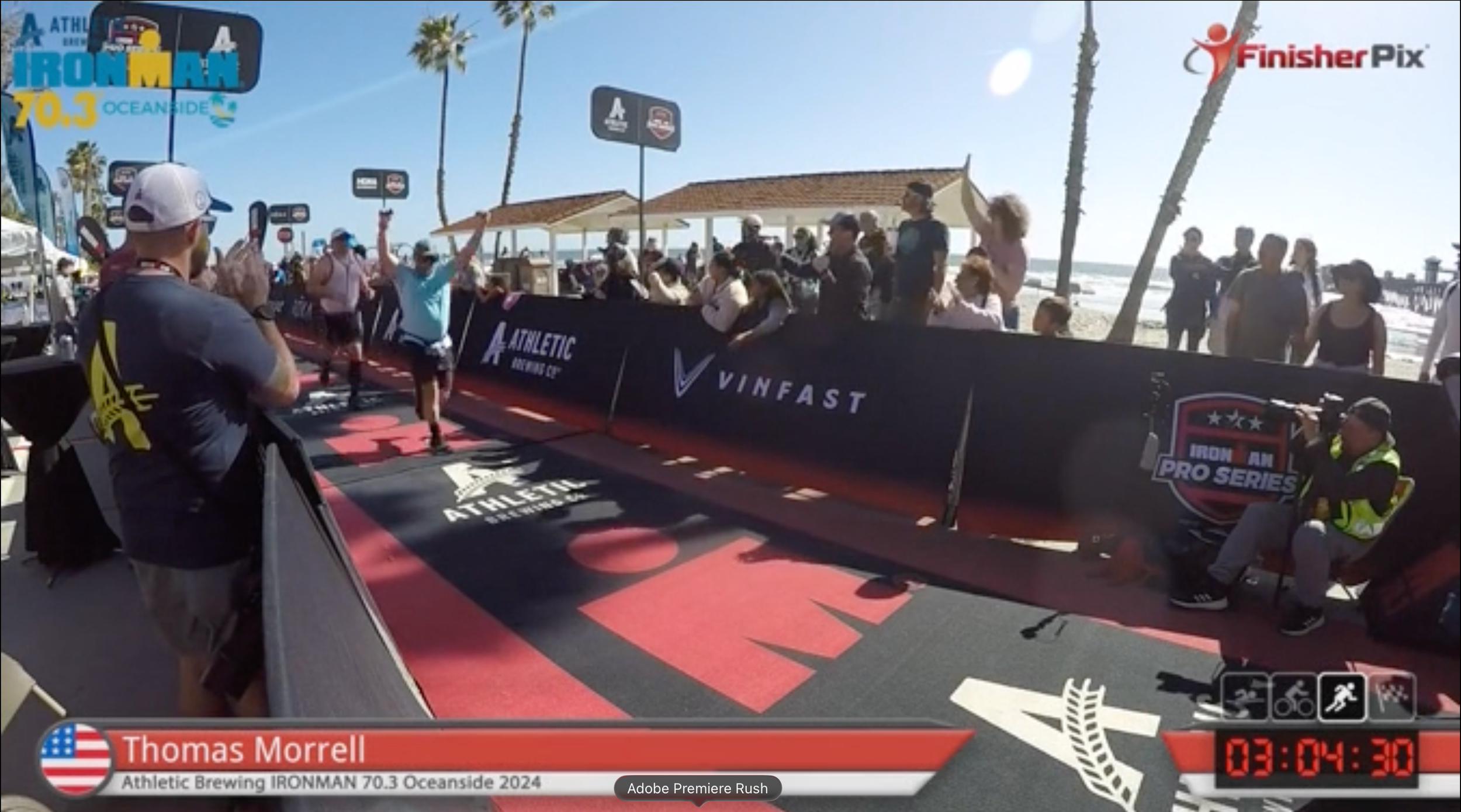
The finish, but not the end.
Chapter 5: The Click
From April to November, life moved on, but the thought of the full distance stayed with me like a song you can’t stop humming.
Then one day my wife showed me a video about a Japanese concept. A Misogi. An event that becomes the defining moment of your year. A year marker. The thing you’ll remember forever.
And I don’t know if it was guts or insanity, but I went to the Ironman site and clicked purchase.
Chattanooga. September 28, 2025.
I signed up alone. I hoped friends or cousins would join.
Everyone said, ”hell no”.
And honestly? Respect.
I was in a strange place in my career at this time. Restless, unfulfilled, with far too much autonomy and not enough meaning. I figured if I was going to change roles, change lanes, reinvent myself, there was really no better time to do something hard.
Kids get older. Schedules fill. Life stacks obligations like bricks.
So I decided: this is the year.
I started training Christmas week of 2024. I wouldn’t stop until late September 2025.
Forty weeks.
The task looked insane… but far enough away to be believable.
Chapter 6: Forty Weeks of Becoming the Guy Again
Training became its own lifestyle.
YouTube videos of Ironman stories. Instagram endurance coaches screaming that I’d fail without their plan. Craigslist searches for used triathlon bikes. Meal prepping. Calendar Tetris with my wife. Long rides. Longer runs. Early mornings so dark they felt prehistoric.
I flirted with hiring a coach and then remembered I also needed a bike, pay for a family trip, and about one hundred other things that triathlon mysteriously requires. So I followed a 40-week plan, did my best, sometimes overdid it, sometimes missed workouts, but overall I’d say I hit around 80% which in real life is basically perfection.
One line became my anchor.
I heard a former Navy SEAL turned elite endurance athlete, Chad Wright say something that changed the way I looked at Training. Joe Rogan had asked him how he finds the motivation to train every day for 100+ mile races…
“I’m not going to get any tougher on race day.” Is what he said.
That sentence crawled into my skull and set up a permanent residence.
Alarm goes off at 3:30 a.m.?
Bed feels like heaven?
Sixteen miles in the dark sounds like a prison sentence?
Yeah. Well.
You’re not getting tougher on race day.
Another foolish thing I did: I told everyone. Friends. Family. Social media.
It was accountability by public humiliation. If I failed, my entire world would get to laugh at me. Which, honestly, is a strong motivator for a man who doesn’t actually like being the center of attention.
Over time, other pieces locked into place:
I set my phone wallpaper to show my yearly goals so every scroll came with consequences.
I scheduled workouts like meetings, because priorities live on calendars, not in good intentions.
I leaned hard into early mornings so family life didn’t pay the bill for my obsession.
And my wife. My beautiful, saint of a wife. She carried weekend mornings with the kids while I disappeared into long runs and long rides. Then I took weekend afternoons while she did real estate showings and open houses.
We said no to things. Missed hangouts. Skipped comfort. Made sacrifices.
And slowly, quietly, the old version of me started to show up again.
Then I found the thing that changed everything.
Visualization.
I wrote out what would happen on race day in insane detail. How I would prepare and eat my breakfast, the nerves I would feel, mantras I would repeat to myself, what I’d do when everything went wrong. Then I recorded it in my own voice.
That recording lived on my phone and I listened to it every day.
Sometimes once. Sometimes five times a day as the race got closer.
It was like living the day before it actually happened. So when race day came, it didn’t feel new.
It felt inevitable.
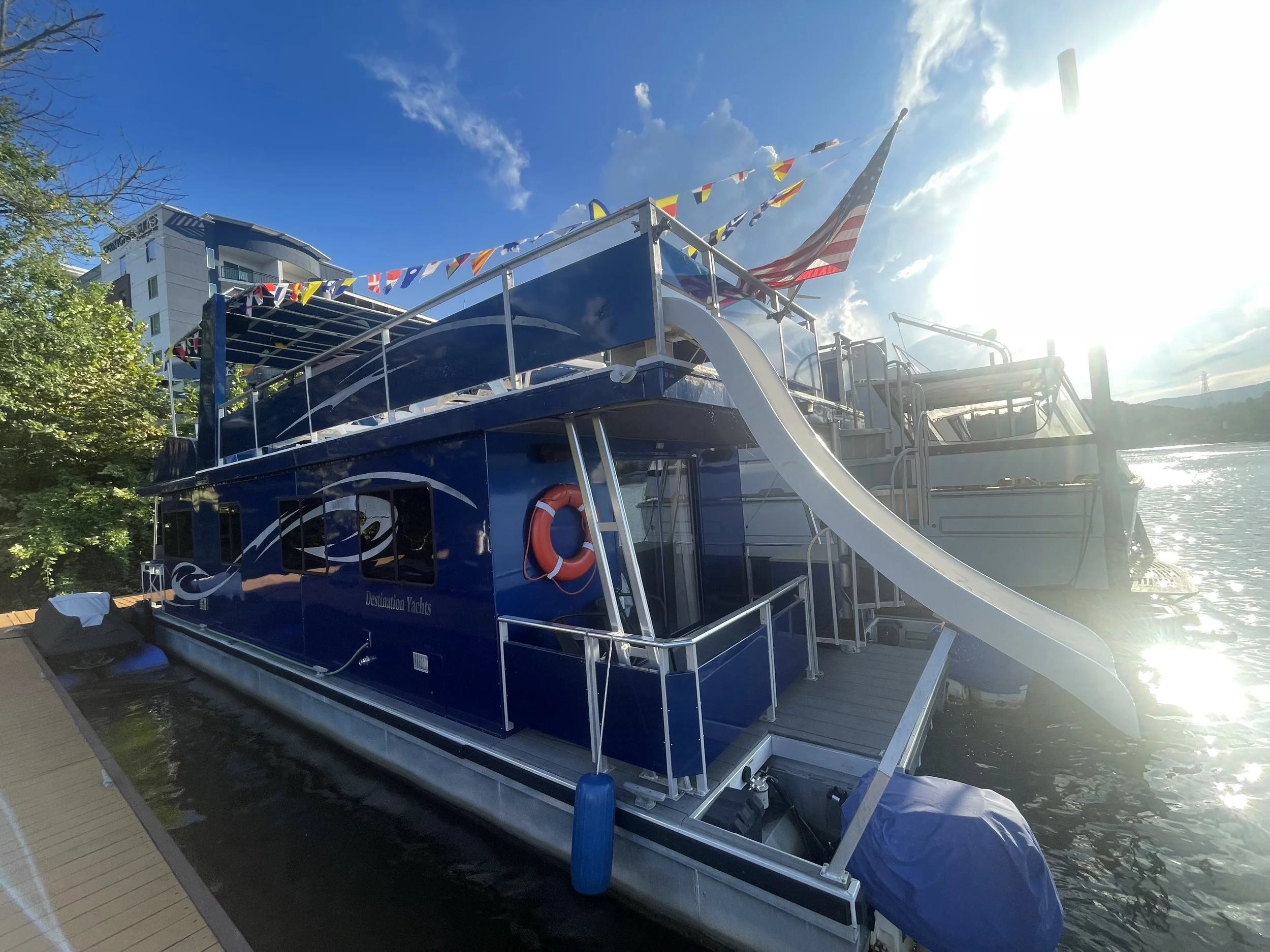
The Chattanooga Blues. Our home for Race weekend.
Chapter 7: Chattanooga—The Family Mission
Race week arrived the way big things do: slowly, then all at once.
We packed the Subaru. Strapped my Quintanaroo (yup, I bought another bike) to a bike rack I bought specifically for this madness. Pulled the kids from school. Hit the road from Savannah with snacks and music and that weird family energy where everyone knows something important is happening but nobody says it out loud.
We even got passed by my parents on the highway, and met my niece along the way like we were on some kind of pilgrimage.
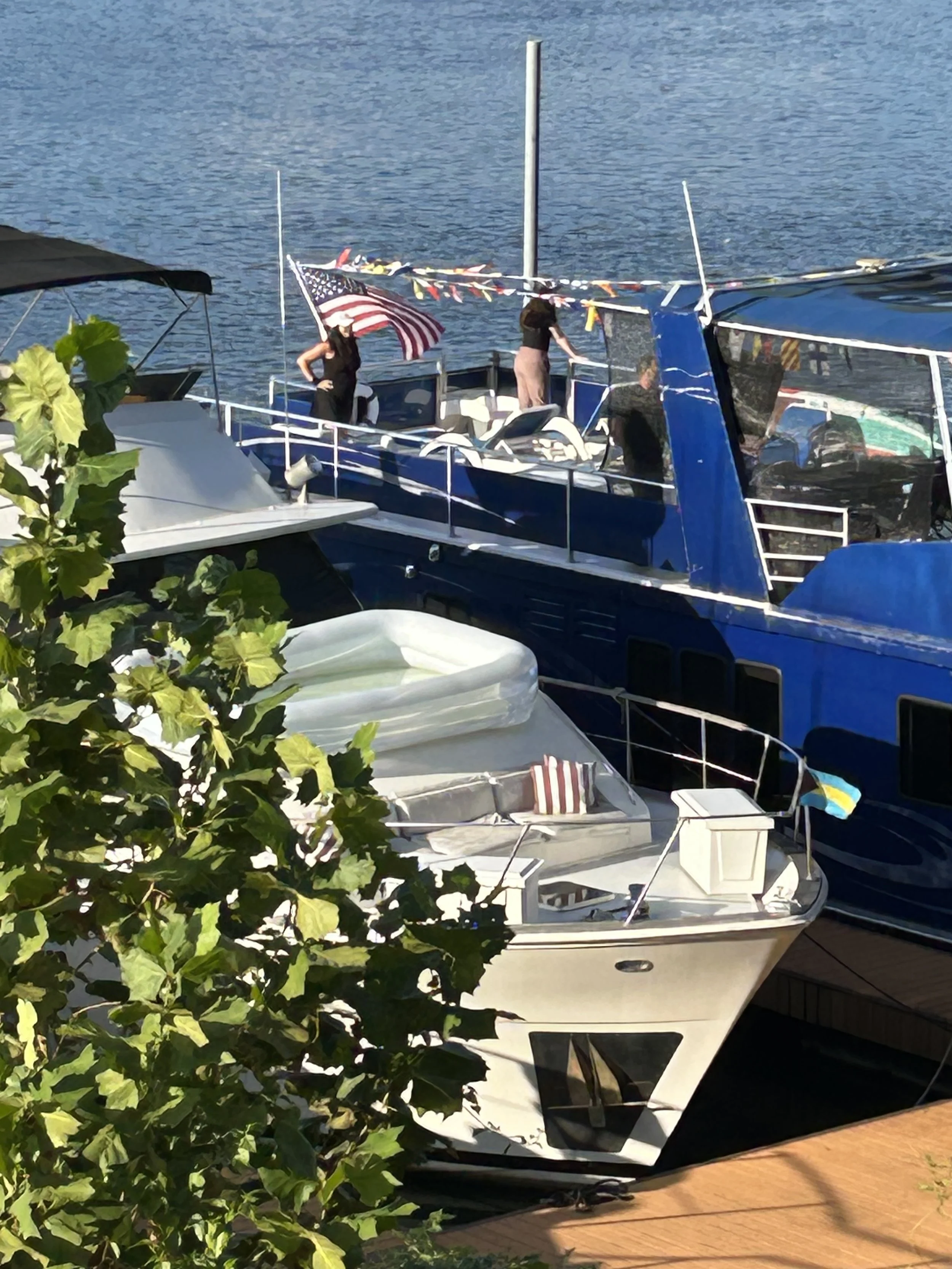
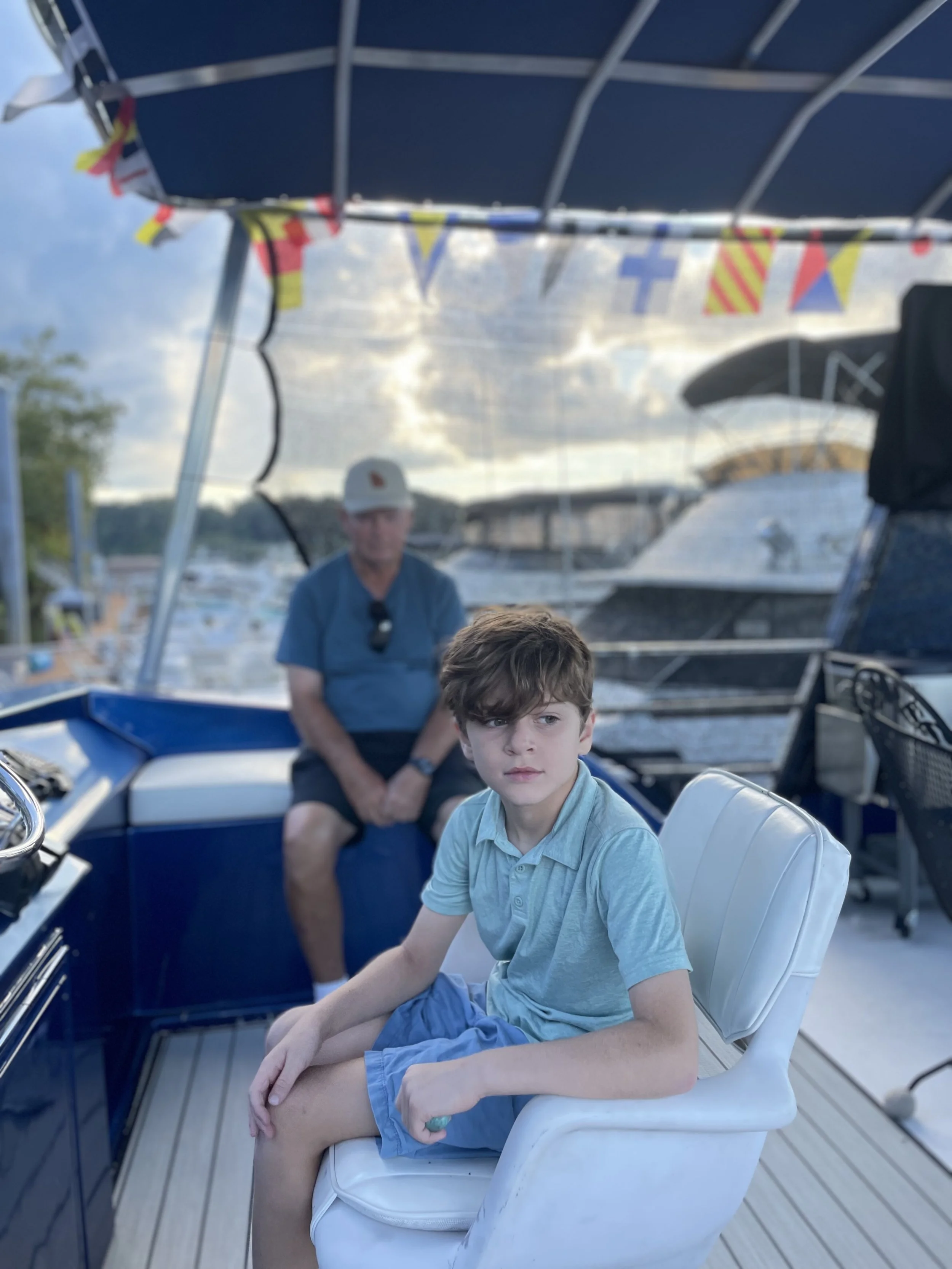
In Chattanooga, we stayed on a houseboat. The Chattanooga Blues. Docked on a marina on the Tennessee River, just down river from where I’d be swimming.
My parents were at Scotty’s on the River when we arrived. A restaurant that sits right above the marina, sending pictures, yelling down to us as we walked down the ramp with all our gear. Making the boat home for the weekend. It felt like summer camp and war prep at the same time.
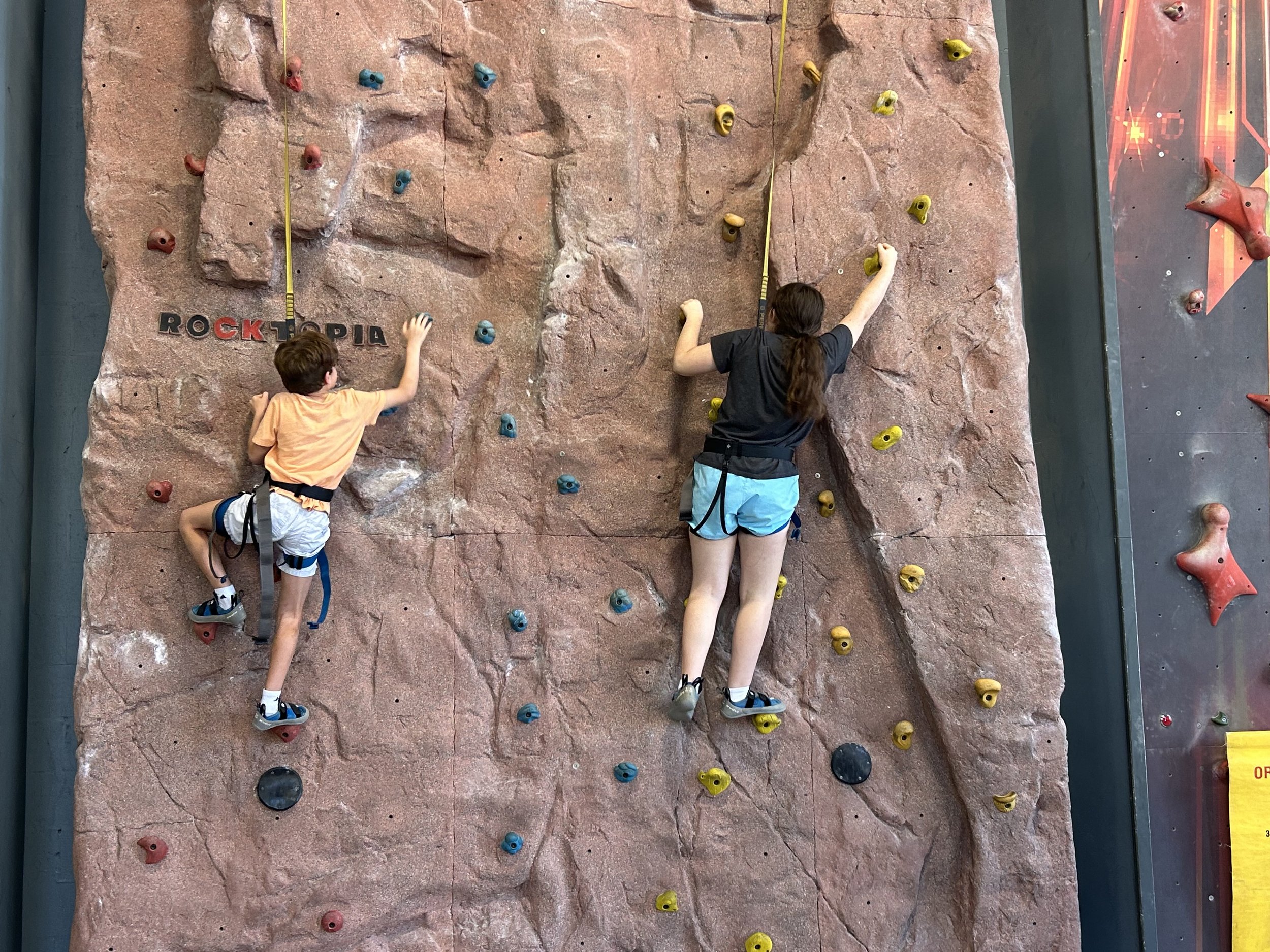
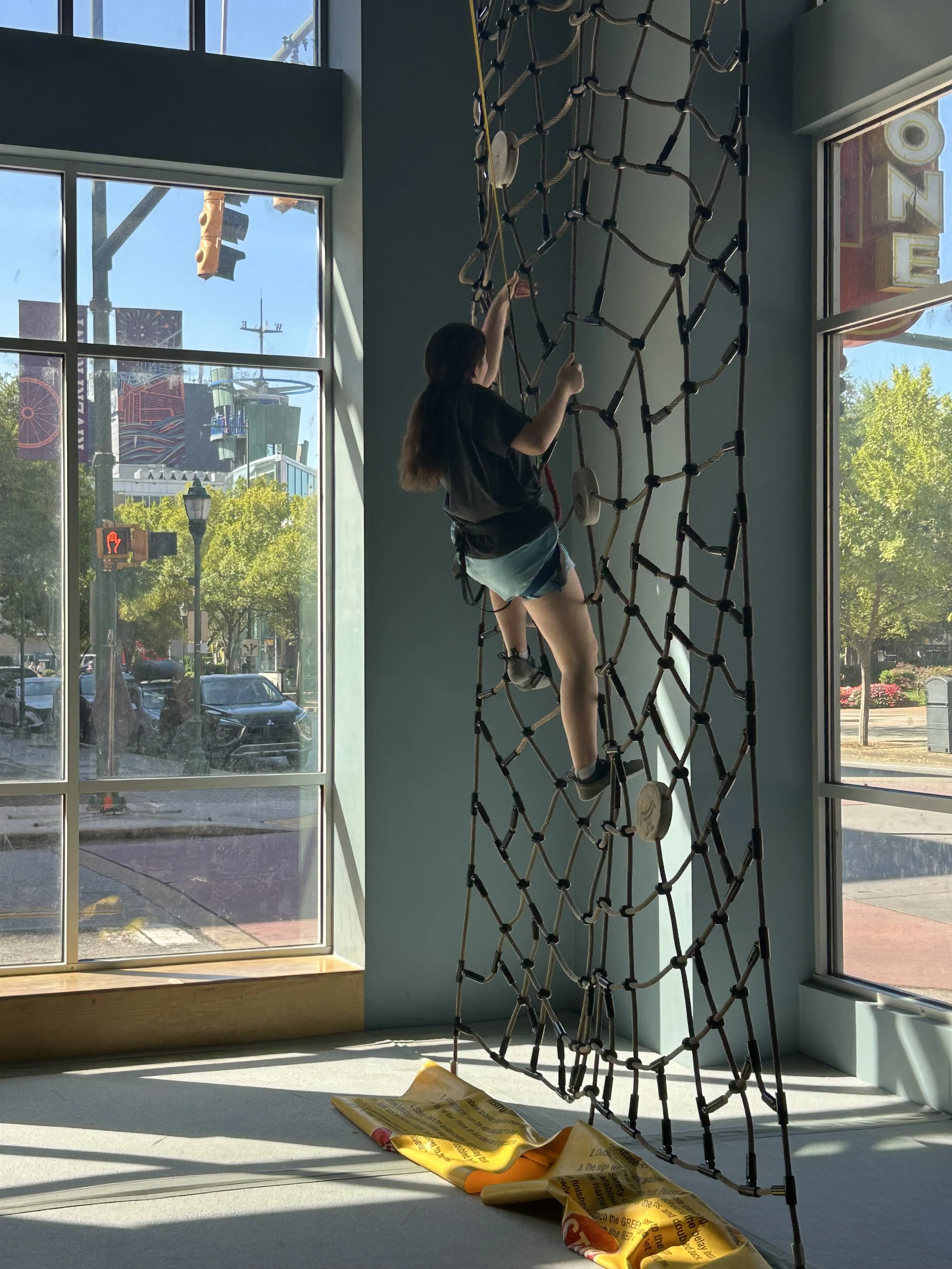
The city was lively. Coffee shops, music, people everywhere. My wife and kids found a rock climbing gym. We wandered. Ate tacos. Listened to a musician playing by the water. The weather was perfect, like Chattanooga was trying to lure us into a false sense of security.
That night, my wife and daughter brought home pasta. We ate on the top deck of the Chattanooga Blues by firelight, laughing, together. Mom, Dad, Maddie (my niece) and her boyfriend Bradley, my Kids and my wife. It was perfect.
I went to bed surprisingly calm.
Chapter 8: Race Day—Autopilot and the River
I woke up and moved like I was already inside the recording.
Breakfast: sourdough, peanut butter, banana, honey. Coffee. Water. Bags triple-checked.
The transition area was bright, loud and chaotic. Floodlights, athletes running around like ants, last-minute adjustments, nerves everywhere.
There were buses to the swim start, but the idea of sitting in a crowded bus did nothing for my calm.
So I walked.
2.4 miles. Quiet. Dark. Breathing. I met a couple newlyweds from North Georgia on the walk. The husband cheering, the wife racing. We talked the whole way, that special pre-race conversation where everyone pretends they’re casual while mentally calculating how close they are to death.
The swim start was chaotic, but far different than Oceanside. Weather made the race wetsuit optional. Meaning if I wanted to wear a wetsuit. I’d have to wait till everyone not wearing a wetsuit had started.
I wore a shorty wetsuit. A decision I made after having to enlist the help of a lifeguard to rip my legs out of a full wetsuit during one cursed training day in Savannah. I must of looked like a grown man trapped in a rubber coffin. I’d still be stuck in that damn wetsuit if that lifeguard hadn’t come around.
So I lined up far from the front. Then the line moved forward.
And when it was finally my turn?
No hesitation.
I jumped in like I’d been doing it for years.
I swam hard. Maybe too hard at first. Heart thumping, breath tight. I tried alternating breaths left and right like a responsible adult.
That plan lasted about twelve seconds.
Because I couldn’t see where I was going.
I drifted off course repeatedly. Kayak lifeguards corrected me like I was a confused Roomba.
I was told there were power-lines going across the river that are the unofficial half way point.
At one point I kept looking for these power lines and couldn’t find them. I was convinced I was behind. Fear set in.
So I stopped, treaded water, flipped up my goggles, looked around.
The power lines were behind me. Far behind me.
Somehow, I’d missed them completely.
I was already near McClellan Island. Which begins to funnel swimmers into the swim finish.
And suddenly, the swim felt like a gift.
After McClellan Island. You pass a series of bridges. Bridge one. Bridge two. Bridge three.
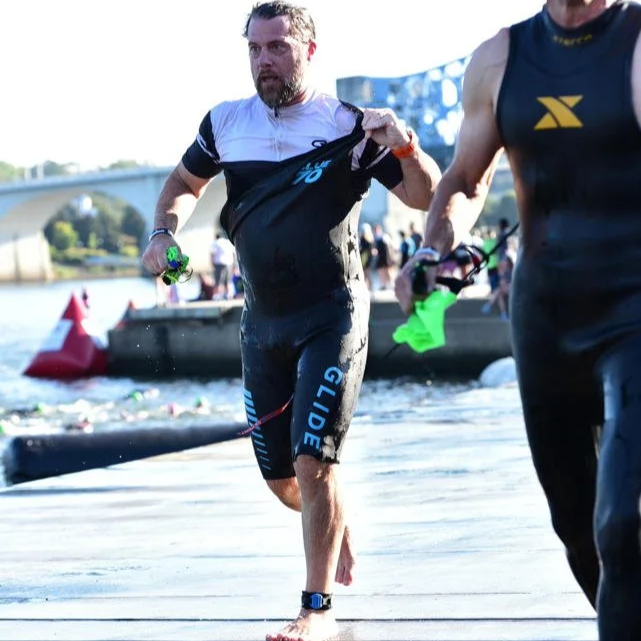
Then the finish platform. Cheers, cowbells, family voices. I climbed out of the water and saw the time:
59 minutes.
In my wildest predictions. My best and most optimistic swim finish would be around 1 hour, 20 minutes. I didn’t understand how. I just knew I’d been handed a miracle and I was going to keep it.
Chapter 9: The Bike—Where Joy Goes to Get Humbled
Transition one was madness: naked people, chaos, bags everywhere, everyone trying not to forget something vital.
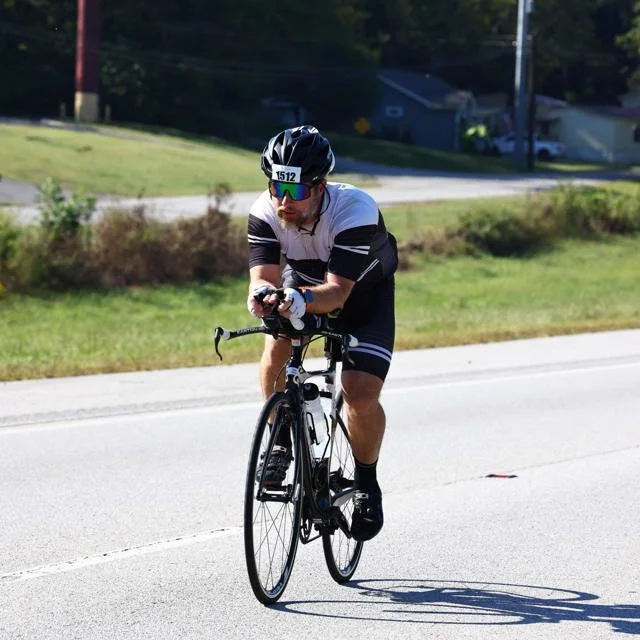
I stayed calm. Helmet. Shoes. Nutrition stuffed into jersey pockets. Sunscreen. Too little, as it turned out. Glasses. Wristband. Bike computer.
Then I walked my bike out and saw my family. My wife Gloria, the kids, my parents, Maddie and Bradley all holding signs, faces lit up.
That sight erased every fear.
I fist-bumped my Dad. Kissed my wife and left smiling.
Mounted the bike.
And a joke floated through the air:
“Only a quick 112 miles.”
Then reality answered: Yes. Exactly. 112 miles.
The course leaving the city was hills. Real hills. Not Savannah hills, which are basically rumors.
The first lap was manageable. The second lap became personal.
There was one downhill where I hit 40-plus mph. A crosswind slammed me and my front end shimmied. My whole body flashed with terror.
It felt like the moment after you almost crash your car. That jittery, sick, alive in the worst way feeling.
And at the bottom of that hill?
A tight turn. Then straight back up the monster climb you just flew down.
Whoever designed the Chattanooga Ironman is a sick human.
The wind picked up. Headwind into the climb. I watched riders sitting in the median, bikes abandoned, wrecked, like defeated soldiers in a trench.
Somewhere between mile 40 and 60, I entered what I can only describe as the Dementor’s Kiss—a flat, featureless emotional state like the soul has been sucked out of you and the idea of joy is far and distant.
The highway section of the ride beside cars and tractor trailers was my least favorite part. Just cones between you and machinery that could erase you from existence.
Aid stations saved me. Volunteers are angels in human form. They refill bottles, take your bike, spray you down, smile like you’re not covered in sweat and dread.
I had left a special needs bag for myself with coconut water, a small can of Coke and a PB&J.
All of it warm.
Which is a sentence that should never be written. I hadn’t thought about packing any ice with it.
I took ibuprofen. I kept eating on schedule. I kept drinking on schedule.
And then somewhere around mile 90, my stomach made a decision without consulting me.
Cramp. Deep. Sharp. Threatening.
The final miles stretched like a bad dream. The hills that hadn’t bothered me earlier now felt like walls.
But then I saw the bridge back to the city. I could see the Ironman village on one side of the bridge which meant family. I could see the Chattanooga Blues on the other side.
And just like that, pain softened. Spirit lifted.
I made it back to transition and saw my family again and I started laughing like a maniac.
Because it was over.
The bike was over.
One of the ideas that kept me going was that once I finished each leg of the race. I never needed to do it again if I didn’t want to. And that was a beautiful feeling.
I had left a piece of my soul out there, but I was done.
Now it was time for the marathon.
Chapter 10: The Run—The Porta-Potty Saga and the Broth Miracle
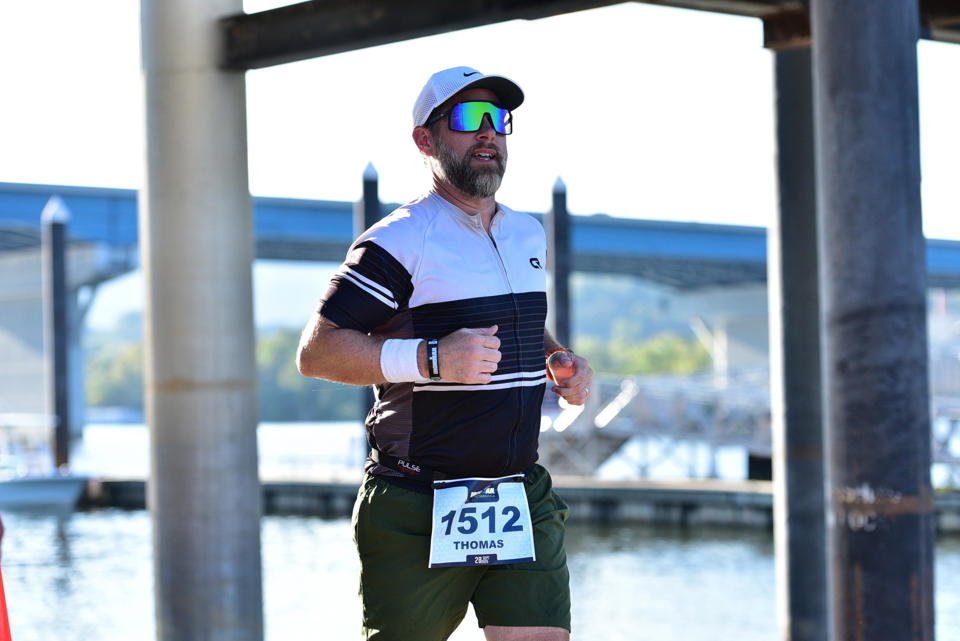
I started the run feeling weirdly good for about three miles. Seeing and hugging my family lit another fire in me.
Then after the first 5K nausea arrived.
My plan was a 4:1 run/walk when things got hard. Run four minutes, walk one. This had helped me in long hot training days in Savannah.
On race day, it fell apart immediately.
Hills. Aid stations. Fatigue. The constant calculation of: Can I run? Can I eat? Can I keep this inside my body?
I was sick of carb snacks and gels so I tried pretzels. Chips. Coke.
Mistake.
From mile three to seven, I lived in a strange purgatory where every thought was either: Don’t puke, or Don’t crap your pants.
At mile seven, my body finally staged a coup.
I found a porta-potty and unleashed everything.
Fire hose from both ends.
Not my proudest moment, but I’m convinced it saved the race. I was terrified I’d lose too much fuel and wouldn’t finish. I was terrified too-much time would slip away.
But I kept moving.
The first half marathon became a blur of aid stations and survival.
Then the turnaround happened.
And something shifted.
At mile 14-ish, I found the thing that changed the entire day:
Chicken broth.
It sounded disgusting. It looked suspicious. A volunteer told me it would give me the sodium I needed.
I sipped it and felt something wake up inside me.
It was like Popeye eating spinach.
I started pounding water. Filling my hat with ice. Letting it melt down my face and neck.
And I ran.
If it wasn’t an aid station and it wasn’t a insanely steep hill, I ran.
I found another runner, a woman from Florida moving at a steady pace, and I tucked in behind her like she was a lighthouse.
We started talking. We rotated leads. We formed a little pack with a couple other runners. Run the mile, walk the aid station. Save your legs for the ugly final miles of the marathon.
My watch died, which added a new layer of anxiety: Am I on pace? How much time do I have?
But I kept moving.
Barton Hill, a half-mile steep ascent arrived and I walked it like everyone else. Head down, determined. At the top, there was a block party. People cheering. Cowbells. That strange Ironman magic where strangers care about you more than your own ego does.
Then the course went quiet and dark. No homes. No lights. Just you and glow sticks someone had put around your neck.
And then finally, the bridge back to Ironman Village.
Halfway over the bridge you could hear the announcer:
“You are an Ironman…”, “You are an Ironman…”
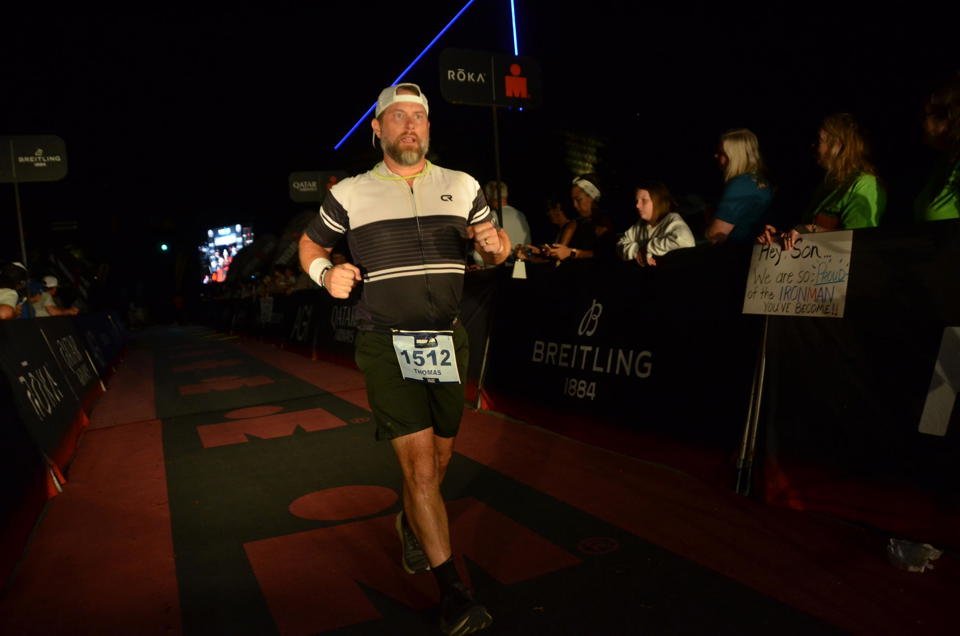
The lights. The noise. The red carpet. The crowd roaring like you were famous.
And I felt the pain fall away like a heavy coat.
I ran harder than I thought I could. I got stronger the closer I got, like the finish line was pulling me in.
I heard my mother’s voice in the crowd:
“Go, Tommy!”
I couldn’t see her through the lights, but I knew that voice the way you know your own name.
My finish time was 15:25.
I crossed the line with a double fist pump and a quiet, fierce joy.
No tears.
Just: Hell yeah. I did it.
Chapter 11: Beer in a Coke Can
At the finish, my wife was screaming. My family was there. My kids’ faces looked tired, proud, confused, all of it forever burned into my memory.
Gloria handed me a Coke can. The last thing I wanted.
Inside the Coke can was beer. The only thing I wanted.
This is the kind of marriage detail you can’t explain to people who aren’t in the trenches with you. It was perfect. Exactly what I needed.
My parents. Maddie. Bradley. Hugs. Kisses. The kind of love that feels like medicine.
Back at the boat, Gloria had decorated our bedroom with the signs and Ironman gear she bought while I was suffering out on the course.
It was a hero’s welcome that made me feel equal parts grateful and unworthy. I ate leftover chicken tenders and fries and tried to watch a movie like a normal human.
I fell asleep immediately.
Sleeping hurt. Getting up to pee hurt. Existing hurt. But the high held.
I remember thinking: I hope my kids absorbed something from this.
Not the obsession. Not the stress.
But the lesson.
That you can do harder things than you think you can.
Chapter 12: The Question That Follows Every Finish Line
Then a few days passed.
And the emptiness returned.
The deep loss of purpose. The quiet question hovering in the room like smoke:
Now what?
I took a long walk and I realized something.
Fulfillment isn’t found in having what you want. That high fades.
Fulfillment is found in the doing.
In the discipline. The daily actions. The devotion to something that demands more of you than comfort ever will.
The goal is just the excuse.
The training is where the meaning lives.
So here’s what the Ironman really gave me:
Not a medal. Not a story. Not even a new identity.
It gave me proof.
Proof that I’ve been playing life too small.
Proof that when I commit. When I build the calendar, make the sacrifices, do the early mornings, rehearse the day, endure the lows. When I do what is necessary. I can be the guy my 8 year old self thought I would be.
And if I can do that for a race…
I can do it for my life.
So my purpose now is simple:
To build a life I don’t want to escape from.
A career I can be proud of.
A legacy and not just a paycheck.
That’s the next race. My new training schedule is to put my thoughts into action in this blog and platform. Deliberate.Living
Writing, creating, story telling and building are like the Ironman for me. Something I was made to do, but got left in a box in a closet while I was busy living. It’s time to empty that box on the coffee table and sort through it.
Now someone point me in the direction of the nearest Porsche dealership.
See you out there.
T.A.M.